
Uncategorized
How to Buy Liquidation Pallets From Target
If you are searching for how to buy liquidation pallets from Target, the first thing to know is simple: you usually are not buying directly off a Target store floor or from a local manager. You are buying through liquidation channels, wholesale suppliers, and bulk inventory networks that handle customer returns, overstock, shelf pulls, open-box merchandise, and mixed general merchandise loads. To effectively buy liquidation pallets from Target, be prepared to invest time in understanding the process.
That matters because your profit is not just based on price. It depends on where the pallet came from, how the inventory was sorted, whether a manifest is available, and how accurately the condition is represented before you pay. For resellers, that difference shows up fast in recovery rate, sell-through speed, and how much money gets tied up in bad stock.
Buy liquidation pallets from Target through reputable sources to ensure quality and value in your purchases.
Understanding the right channels to buy liquidation pallets from Target can significantly influence your success rate.
As you learn how to buy liquidation pallets from Target, consider the importance of supplier reputation.
Many resellers choose to buy liquidation pallets from Target for their potential profitability.
To maximize your earnings, buy liquidation pallets from Target that align with your selling strategy.
The best way to ensure success is to buy liquidation pallets from Target that have favorable reviews.
How to buy liquidation pallets from Target the right way
When you learn how to buy liquidation pallets from Target, it becomes easier to identify quality goods.
Buy liquidation pallets from Target with a clear understanding of the risks involved.
Be strategic when you buy liquidation pallets from Target to build a reliable inventory.
Having a checklist can help you effectively buy liquidation pallets from Target.
When you know how to buy liquidation pallets from Target, you reduce the chances of making costly mistakes.
Investing in knowledge can greatly enhance your ability to buy liquidation pallets from Target successfully.
The smart approach is to treat Target liquidation like inventory sourcing, not bargain hunting. A pallet can look cheap and still be expensive if the mix is weak, the damage level is high, or the shipping cost wipes out your margin. Serious buyers focus on source quality, category fit, and resale channel match before they place an order.
Target liquidation inventory typically moves through bulk channels after products are removed from standard retail sale. That can include returns, overstock, seasonal transitions, shelf pulls, and open-box goods. Some loads are sorted into categories like toys, electronics, home goods, tools, apparel, or small appliances. Others are mixed pallets, which can be attractive for lower entry cost but harder to process and price.
Assessing your capacity to handle goods will help when you buy liquidation pallets from Target.
Pricing strategy is essential when you buy liquidation pallets from Target.
Understanding market demand will guide you on when to buy liquidation pallets from Target.
Always analyze the potential return before you buy liquidation pallets from Target.
By mastering the process, you can effectively buy liquidation pallets from Target.
Mistakes can be minimized when you learn how to buy liquidation pallets from Target properly.
Having clear goals can streamline your process to buy liquidation pallets from Target.
Tracking your purchases can help you refine how to buy liquidation pallets from Target in the future.
If you sell online, manifests and condition notes matter more because listing labor is high and buyers expect accuracy. If you run a discount store, bin store, or flea market operation, mixed loads can still work well because you can move volume faster and recover value across a broader spread of merchandise.
Forming relationships with suppliers can enhance your ability to buy liquidation pallets from Target over time.
Where buyers actually get Target liquidation pallets
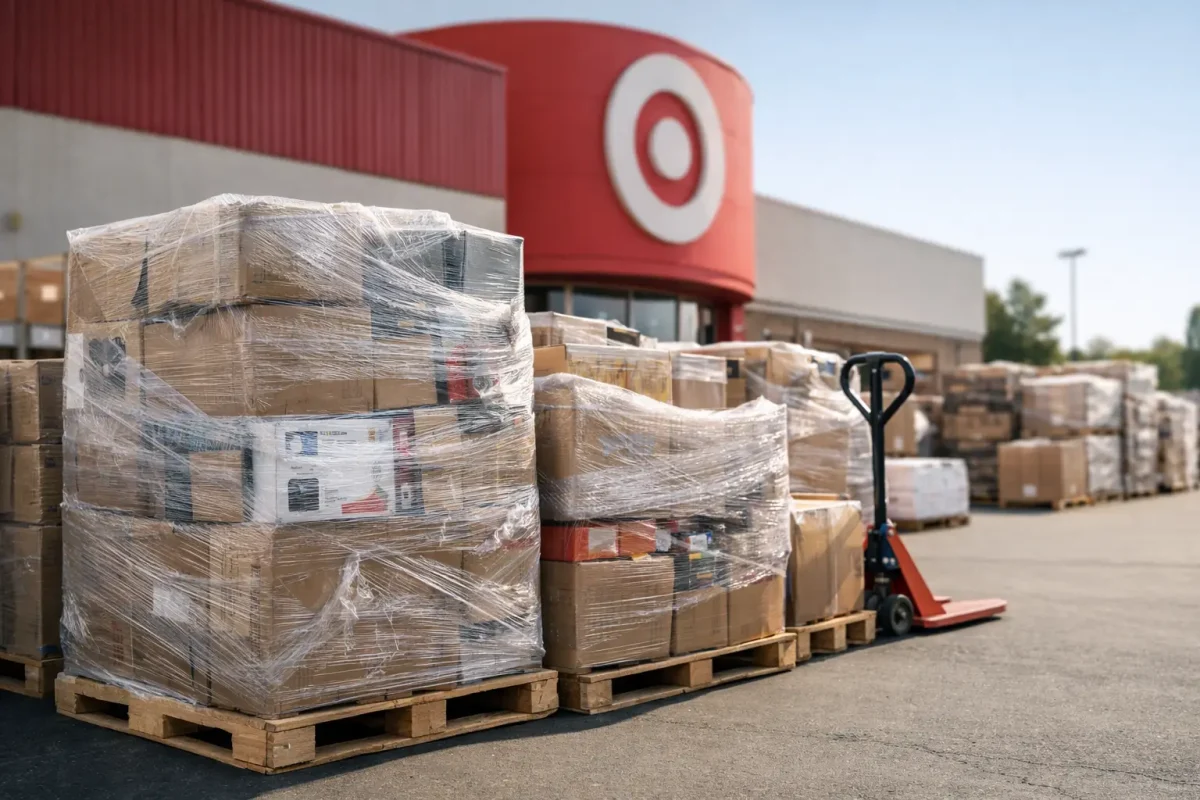
Most buyers access this inventory through liquidation wholesalers, approved resale channels, and secondary market suppliers that buy in bulk and redistribute by pallet or truckload. This is where experience counts. The right supplier gives you enough detail to make a business decision, not just a low headline price.
A strong wholesale source should clearly identify what kind of goods are in the load. Is it customer returns, shelf pulls, overstock, salvage, or a blend? That is not a minor detail. Overstock and shelf pulls usually carry lower risk than heavy return loads. Salvage can be priced lower, but it often requires parts harvesting, refurbishing, or deeper sorting.
This is also where newer buyers get tripped up. They assume all Target pallets are alike. They are not. A manifest electronics pallet and an unmanifested mixed general merchandise pallet have completely different risk profiles. One is closer to a planned inventory buy. The other is a margin play that depends on your ability to sort, bundle, and move product across multiple channels.
What to check before you buy
Before you commit to any Target liquidation pallet, ask for the details that affect resale value. The first is the product category. You want inventory that fits your current sales channel, your buyer base, and your handling ability. Electronics can offer higher upside, but testing and returns management are heavier. Home goods, toys, apparel, and small appliances can be easier to move depending on season and platform.
The second is condition. Terms like new, like new, open box, returns, refurbished, and salvage should never be treated as interchangeable. Open-box can be strong inventory if the contents are complete. Customer returns can still produce good margins, but the variance is wider. Salvage belongs with buyers who know how to process damaged goods, not with first-time pallet buyers looking for quick online resale.
The third is manifest quality. A detailed manifest gives you a working view of estimated retail value, unit count, brands, product types, and sometimes SKU-level information. It is not a guarantee, but it is a much better basis for pricing than a vague pallet description. If there is no manifest, the buy should reflect that risk.
The buyers who make this market work are the ones who stay selective, move fast on good loads, and leave the wrong inventory alone. Remember, always strive to buy liquidation pallets from Target wisely.
The fourth is shipping. Many buyers focus on pallet price and ignore freight until checkout. That is a mistake. Freight can change the economics of the load, especially for rural delivery, residential drop-off, liftgate service, or international forwarding. Good inventory at the wrong freight cost becomes average inventory very quickly.
How to judge if a Target pallet is worth it
The right question is not, “Is this pallet cheap?” The right question is, “Can this load produce enough margin after freight, labor, testing, packing, platform fees, and dead stock?”
Start with your resale model. If you sell single items on eBay, Facebook Marketplace, Whatnot, or your own storefront, estimate your average recovery rate by category. Then subtract your real operating costs. If you run a discount outlet or bin store, estimate how quickly you can turn the pallet and what your expected recovery is over a set selling window.
For example, a mixed pallet with a strong retail value claim may still underperform if too many items are incomplete, low-demand, or expensive to ship individually. On the other hand, a less flashy home goods pallet can be a better buy because the sell-through is steadier and the labor is lower. This is why experienced buyers often prefer repeatable categories over random upside.
Best buying strategy for new resellers
If this is your first Target liquidation purchase, do not start with the biggest load you can afford. Start with a manageable pallet in a category you already understand. You want to learn the supplier, the condition spread, the freight process, and your own resale pace before you scale.
A focused category pallet is usually the safer entry point. If you know toys, buy toys. If you know small kitchen appliances, buy that lane. If you already sell apparel, stay there. Category familiarity shortens processing time and reduces pricing mistakes. Mixed merchandise sounds exciting, but it often creates more work than first-time buyers expect.
It also helps to buy from a supplier that offers multiple load sizes. That gives you room to test a pallet, then move into larger volume if the inventory performs. Buyers who want long-term supply usually do better with a wholesale partner that can support repeat orders rather than a one-off deal source.
Red flags to avoid when buying Target liquidation pallets
Some problems show up before the order is placed. If the seller is vague about inventory condition, cannot explain the load type, or makes unrealistic retail value claims without documentation, that is a warning sign. Serious wholesale inventory should be described in a way that lets buyers assess risk.
Watch for photos that look generic or do not match the load description. Be cautious if there is no discussion of pallet size, estimated unit count, or freight terms. You should also be careful with prices that look far below market without a clear reason. Low price can mean high damage, poor assortment, unsorted salvage, or missing product.
Another issue is buying the wrong pallet for your business model. A return-heavy electronics load may be profitable for a refurbisher, but a bad fit for a casual reseller with no testing setup. A mixed apparel pallet may suit a flea market vendor but frustrate a seller who depends on SKU-level online listings. Good buying starts with matching the load to your operation.
How serious buyers scale Target pallet purchases
Once a pallet performs, the goal shifts from experimentation to consistency. That means tracking recovery rate, defect rate, turnaround time, and category performance. The buyers who scale profitably are not just hunting the lowest price. They are building a repeatable sourcing system.
That is where a direct-access wholesaler can make a difference. Pallets Liquidation Worldwide works with bulk buyers looking for affordable inventory across multiple categories, load sizes, and resale models. For growing resellers, the advantage is not only access. It is having options that fit your budget, your market, and your ability to turn inventory for profit.
If you are buying for export or international resale, consistency matters even more. Freight planning, documentation, and load composition all affect landed cost. In that case, broad category access and reliable wholesale communication become part of the margin, not just customer service.
Final thoughts on how to buy liquidation pallets from Target
The best Target liquidation buys usually come from disciplined decisions, not impulse deals. Know your category, understand the condition, factor in freight, and buy liquidation pallets from Target that match how you actually sell. When the numbers work on paper and the source is dependable, a single pallet can turn into a steady supply line instead of a one-time gamble. Always remember to buy liquidation pallets from Target with careful consideration.
The buyers who make this market work are the ones who stay selective, move fast on good loads, and leave the wrong inventory alone.

