
Style
How Tool Pallets for Resale Build Real Margin
Jul
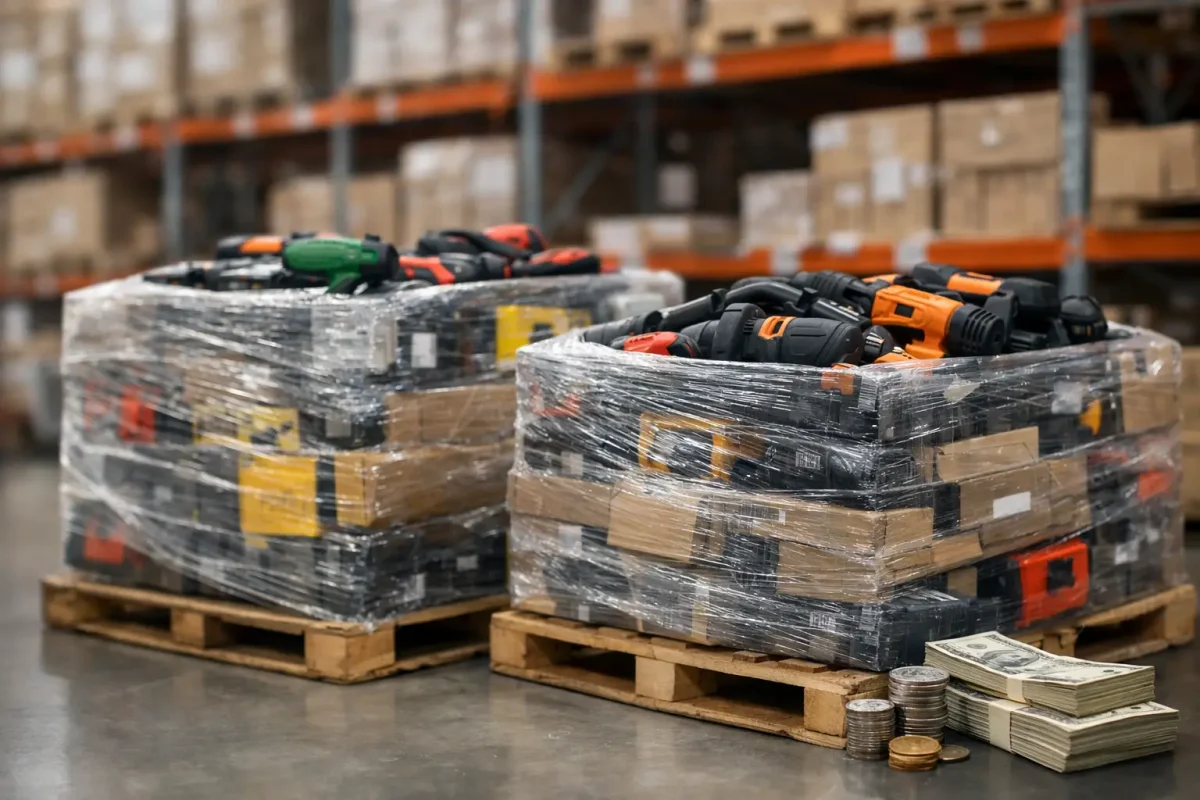
A pallet of cordless drills, hand tools, saw accessories, and jobsite equipment can create strong resale inventory fast, but only when the buy price leaves room for reality. Tool pallets for resale give discount retailers, online sellers, flea market vendors, and independent contractors access to recognizable merchandise below standard wholesale cost. The opportunity is real. So are the costs of testing, sorting, missing parts, shipping, and slow-moving stock.
The buyers who win are not simply buying the cheapest pallet. They are buying inventory they can inspect, price, and move through the sales channels they already control. That is how a bulk tool purchase becomes repeatable margin instead of a garage full of untested returns.
Why Tool Pallets for Resale Move Well
Tools have a resale advantage that many liquidation categories do not. A buyer looking for a drill, socket set, tape measure, pressure washer, or replacement battery usually has a clear need. That creates demand across local retail, online marketplaces, contractor networks, swap meets, and social selling.
Recognizable brands can also support faster sales, especially when the condition and included components are accurately represented. New overstock, shelf pulls, and clean open-box goods are often easier to list at a predictable price. Customer returns and salvage can still be profitable, but they require more labor and a tighter buy price.
Tool inventory is especially attractive for sellers who can sell in more than one way. Higher-value power tools can be tested and listed individually. Hand tools, accessories, bits, fasteners, and lower-ticket items can be bundled into value packs or sold from a physical discount store. One pallet can supply several revenue streams if it is sorted correctly.
Choose the Right Pallet Condition
Condition is the first number behind every potential profit calculation. Do not assume that a pallet described as tools contains ready-to-sell retail units. Review the available manifest, condition notes, estimated retail value, quantity, and any product photos before you commit.
Overstock and shelf pulls
Overstock and shelf-pull tool pallets are often the most straightforward option for newer resellers. These goods may be new, store-ready, or close to store-ready. They can carry a higher upfront cost, but less time is spent on repairs, cleaning, part matching, and customer-service issues.
This format makes sense when you sell through a retail store, an established online account, or a local customer base that expects clean packaging and consistent quality. The trade-off is that your margin percentage may be lower than it would be on returns. Your inventory risk is usually lower too.
Open-box and customer returns
Open-box and return pallets can deliver better buying opportunities when you have a process for checking merchandise. Some units may be unused but returned because of damaged packaging, duplicate gifts, or a customer changing their mind. Others may have missing chargers, worn batteries, damaged cases, or functional problems.
This is where operational discipline matters. Test power tools, confirm chargers and batteries, photograph actual condition, and separate complete units from parts-only inventory. A missing battery can reduce the resale value of a cordless tool sharply, while a complete kit with a case and accessories may command a strong price.
Salvage and untested inventory
Salvage pallets are not a shortcut to easy profit. They are a lower-cost inventory source for buyers who know how to repair, part out, recycle, or sell clearly labeled untested merchandise. If your business has no repair capability and no outlet for parts, a low salvage price can become an expensive mistake.
Buy salvage when your plan is specific. You might recover value through motors, batteries, chargers, cases, blades, or accessory lots. Without that plan, stay focused on grades that match your selling capacity.
Price the Load Before You Buy It
Retail value is a reference point, not your expected revenue. A $10,000 estimated retail pallet is not automatically worth $5,000, or even $2,000. Retail estimates can include products that are incomplete, obsolete, damaged, or difficult to sell at full market price.
Start with your likely recovery rate. Estimate what you can realistically collect after accounting for condition, marketplace competition, selling fees, labor, shipping materials, returns, and dead stock. For a mixed customer-return tool pallet, your expected recovery might be far below the original retail total. For clean, brand-name overstock, it may be substantially stronger.
Then subtract every cost tied to getting the inventory sold. Your true landed cost includes the pallet price, freight, unloading, storage, testing supplies, replacement parts, labor, platform fees, and local delivery when applicable. If you sell online, the cost to package a heavy tool can change the economics of a seemingly profitable item.
A simple operating rule helps: buy only when the projected net resale value leaves room for mistakes. A pallet with no margin for broken units, missing parts, or price reductions is not a deal. It is a gamble.
Build a Sales Plan Around the Inventory
The best channel depends on the product mix. Large compressors, generators, pressure washers, and heavy shop equipment often perform better through local pickup because freight can erase online profit. Smaller drills, hand-tool kits, laser levels, tool bags, and accessories are more suitable for marketplace shipping.
Physical discount stores can use tool pallets to create frequent foot traffic. Place tested, ready-to-use items at clear prices. Create separate sections for incomplete, as-is, and parts-only goods so customers know exactly what they are buying. Honest condition labels protect your reputation and reduce arguments at the register.
Online sellers should avoid listing every item the same way. A branded, complete power-tool kit deserves individual photos, model information, condition notes, and a competitive price. A group of mixed sockets or drill bits may sell better as a bundle. Time spent on listing should match the expected return.
For flea market and social sellers, visible value matters. Clean tools, group similar products, and display working units with batteries charged when possible. Buyers respond quickly when they can see that an item has been checked and priced fairly.
What to Check When the Pallet Arrives
Speed matters after delivery. The longer inventory sits unsorted, the more cash stays trapped in your stockroom. Create a receiving process before the shipment arrives and assign each item a clear status: ready to sell, needs testing, incomplete, repair candidate, parts-only, or unsellable.
For power tools, inspect the housing, cords, battery contacts, triggers, chucks, guards, and safety features. Test basic function where safe to do so. Match chargers, batteries, manuals, cases, and accessories to the correct units. Keep sets together, because a complete kit generally sells faster and for more money than separated pieces.
Document the condition immediately with photos and internal notes. This protects your pricing decisions and gives your team a reliable record when listing products. It also helps you identify patterns in future loads, such as a category with frequent missing parts or a brand that performs well in your market.
Buy for the Business You Have Now
A full truckload may offer a lower per-unit cost, but it is not automatically the right first purchase. A smaller pallet can be the smarter move when you are testing a category, building a customer base, or learning how much repair work your operation can handle. Growth comes from turning inventory consistently, not from buying more than you can process.
Pallets Liquidation Worldwide supplies tools and other liquidation categories in flexible bulk formats for buyers who want direct access to resale inventory. The right load depends on your budget, storage space, condition tolerance, and sales channels. Ask clear questions about the merchandise format and plan your receiving process before the freight is booked.
The strongest tool resale businesses treat every pallet as a buying decision, a processing job, and a sales campaign. Start with inventory you can evaluate, price it for the market you actually serve, and keep enough margin to handle the surprises that come with liquidation. That approach gives each pallet a better chance to fund the next one.

