
Style
Overstock Merchandise Pallets Wholesale
Jul
One good pallet can change your week. One bad buy can tie up cash, storage space, and selling time. That is why overstock merchandise pallets wholesale remains one of the smartest sourcing options for resellers who want recognizable inventory, lower buy costs, and room for real margin without committing to full truckloads.
For small stores, online sellers, flea market vendors, and export buyers, overstock gives you a cleaner entry point than many return-heavy loads. You are often buying excess retail inventory that did not sell through on schedule, not just products sent back by customers. That difference matters when you need shelf-ready goods, stronger presentation, and faster turnaround.
Why overstock merchandise pallets wholesale attracts serious resellers
Margin is the first reason. When you buy overstock at wholesale pallet pricing, you are stepping into inventory that retailers and large supply chains need to move fast. Their priority is recovery and volume, while your priority is resale profit. That gap creates opportunity.
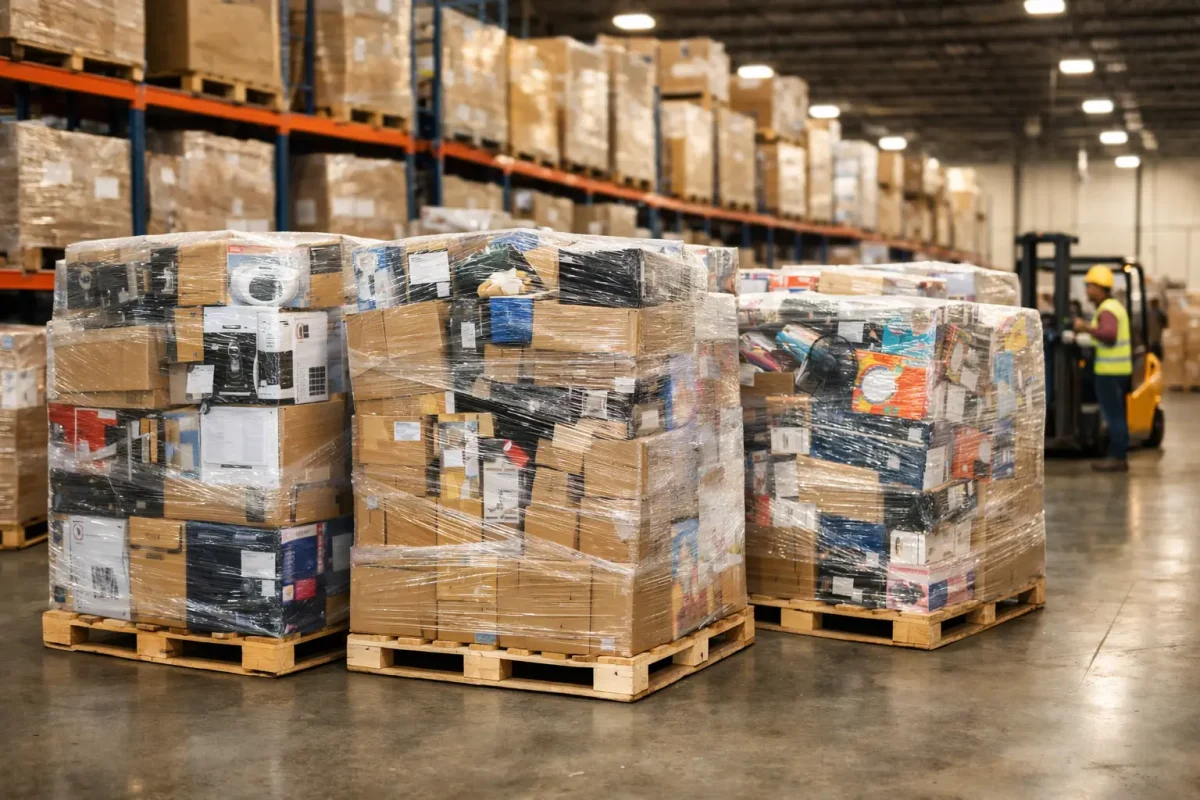
The second reason is product mix. Overstock pallets can include current consumer categories that move every day – small appliances, electronics, home goods, tools, apparel, footwear, toys, and seasonal merchandise. If you sell across multiple channels, that variety helps you test demand without being locked into one narrow product line.
The third reason is flexibility. Not every buyer is ready for a truckload. Pallets let newer resellers buy in at a manageable level while experienced buyers can scale up once they know which categories perform best. That matters if you are balancing storage, cash flow, labor, and shipping costs.
What overstock inventory usually includes
Overstock is not one fixed condition grade. In wholesale, the term usually covers excess retail stock, shelf pulls, closeouts, open-box units, and mixed surplus inventory. Some pallets are clean and retail-ready. Others may include packaging wear, discontinued models, or assorted SKUs that need sorting.
This is where buyer discipline matters. A pallet of kitchen appliances may be a strong fit for a discount store with floor space and local demand. The same pallet may be slower for an online seller dealing with individual testing, repacking, and shipping. A pallet of apparel can move quickly in live selling or bin-store formats, but sizing mixes and seasonality still affect results.
The best buyers do not just ask what is on the pallet. They ask how fast the category moves in their own sales channel.
How to buy overstock merchandise pallets wholesale with profit in mind
Start with your resale model, not the supplier catalog. If you sell on marketplaces, product consistency and shipping practicality matter more than raw unit count. If you run a discount retail store, broad mixed inventory may be an advantage because it creates variety on the floor. If you export, category demand and packaging condition may outweigh brand mix.
Then look at your total landed cost. The pallet price gets attention, but profit is made after freight, handling, testing, relabeling, and sell-through time. A cheap pallet that takes months to process is not always cheaper than a cleaner load that sells quickly.
You also want to match buy size to operational capacity. New buyers often overestimate how fast they can list, sort, test, or move inventory. A smaller pallet order that turns fast can outperform a larger order that sits. Wholesale is about volume, but smart volume comes after you know your numbers.
What separates a good wholesale pallet supplier from a risky one
Direct sourcing matters. Buyers want access to inventory without unnecessary markups from too many hands in the chain. A supplier that works in liquidation and surplus at scale is usually better positioned to offer category depth, repeat buying options, and load sizes that fit different budgets.
Transparency matters just as much. No liquidation supplier can promise that every pallet is identical or every SKU will perform the same. But a serious wholesale partner should be clear about merchandise type, condition range, pallet format, and shipping process. Trust is built through straightforward inventory descriptions and consistent fulfillment, not exaggerated claims.
Support is another factor that buyers often ignore until something goes wrong. First-time buyers especially need guidance on pallet selection, category fit, and freight planning. Experienced buyers may need help scaling from pallets to larger volume. A supplier that understands reseller economics is more useful than one that simply posts a price and disappears.
Best categories to source in overstock merchandise pallets wholesale
Some categories are consistently popular because they serve both local and online demand. Tools, kitchen appliances, home goods, toys, electronics accessories, and apparel remain strong because they appeal to broad buyer bases and support multiple resale channels.
That said, the best category depends on how you sell. Electronics can offer strong upside, but they may require more testing and carry higher return risk. Apparel can produce fast turnover, but only when brand mix, sizing, and season match your market. Toys can move quickly around holidays, while home goods often perform steadily year-round.
A lot of resellers do best by combining dependable staple categories with a few higher-margin opportunistic buys. That approach keeps cash moving while still giving room for bigger wins.
Common mistakes buyers make
The biggest mistake is buying based on excitement instead of sell-through. A pallet may look attractive because it contains recognizable categories, but if your customer base does not want those items, the discount means very little.
Another mistake is ignoring condition and labor. Overstock is generally more attractive than heavily returned goods for many sellers, but mixed loads can still require sorting, repackaging, cleaning, and individual item checks. If your operation is lean, labor-heavy pallets can slow your business down.
Freight is another blind spot. Buyers focus on the pallet cost and forget delivery access, liftgate needs, warehouse receiving, or international shipping arrangements. Those details affect total profit.
Finally, many buyers fail to build repeatable sourcing. One lucky pallet is not a business model. Consistent buying from a supplier with range, volume options, and ongoing inventory access is what helps a reseller grow.
Why pallet buying works for both new and established buyers
New resellers like overstock pallets because they provide a lower entry point than larger wholesale formats. You can test categories, learn pricing, and build your sales process without taking on truckload-level risk. That makes pallets a practical move for side hustlers, marketplace sellers, and first-time bulk buyers.
Established buyers like them for a different reason. Pallets are useful for filling category gaps, responding to short-term demand, and adding margin-friendly inventory without waiting on standard distribution channels. They also work well for buyers who want to mix load types across stores, online sales, export, and local wholesale.
This is where a supplier with broad category access becomes valuable. If you can source tools this month, toys next month, and home goods after that, you can adjust your buying strategy around demand instead of forcing demand around whatever inventory you already have.
Scaling beyond the first pallet
Once you know which categories turn well, scaling becomes a numbers game. You track sell-through speed, average recovery per pallet, labor time, return rates, and freight cost. The strongest wholesale buyers do not guess. They know what their business can absorb and what categories deserve a bigger buy.
As confidence grows, many buyers move from trial pallets into recurring pallet orders, mixed bulk buys, or truckloads. That progression is usually more profitable than jumping too big too early. It protects cash flow and gives you time to sharpen your resale process.
For buyers who want direct-access liquidation inventory, flexible quantities, and product categories that fit both local and online resale, Pallets Liquidation Worldwide is built around that wholesale model. The goal is simple: give buyers inventory options that support margin, movement, and repeat business.
Overstock works best when you treat it like inventory strategy, not a gamble. Buy what fits your market, know your landed cost, and stay close to suppliers who can keep you stocked when demand picks up.

