
Style
Is Wholesale Liquidation Pallets Legit?
Jul
You have probably seen pallet listings that look almost too good to pass up – branded tools, electronics, shoes, small appliances, and mixed general merchandise at a fraction of retail. That leads to the obvious question: is wholesale liquidation pallets legit? The short answer is yes, liquidation pallets are a real wholesale business model. The better answer is that legitimate opportunity and real risk exist in the same transaction, and your profit depends on knowing the difference.
For resellers, discount store owners, flea market vendors, and online sellers, liquidation is not some fringe side market. Major retailers need channels to move customer returns, overstock, shelf pulls, open-box goods, and salvage inventory fast. That inventory gets consolidated and sold in boxes, pallets, and truckloads to bulk buyers. The model is legitimate because the supply is real. What separates a good buy from a bad one is the supplier, the load quality, the paperwork, and your own resale plan.
Is wholesale liquidation pallets legit for resellers?
Yes, wholesale liquidation pallets are legitimate when they come from a real supply chain. Retailers, distributors, and marketplaces constantly create excess inventory. Returned items cannot always go back to the shelf. Seasonal goods get cleared out. Packaging gets damaged. Product lines change. Instead of letting those units sit, companies liquidate them in bulk.
That is why so many resellers build businesses around liquidation inventory. They are buying below traditional wholesale pricing because the merchandise is not first-run retail stock in perfect shelf condition. The lower cost is the trade-off for more sorting, more testing, and more uncertainty. If you understand that, the business makes sense.
What confuses new buyers is the marketing around it. Some sellers present every pallet like a hidden goldmine packed with easy profit. Serious wholesale buyers know that is not how this works. A legitimate pallet business is built on volume, category knowledge, condition grading, and consistent sourcing, not fantasy margins on every load.
Why liquidation pallets are real business inventory
The reason liquidation works is simple: retailers recover value by moving bulk inventory quickly, and buyers accept mixed condition merchandise in exchange for lower cost. That can create a margin opportunity across many categories, especially electronics accessories, tools, apparel, shoes, home goods, toys, and small appliances.
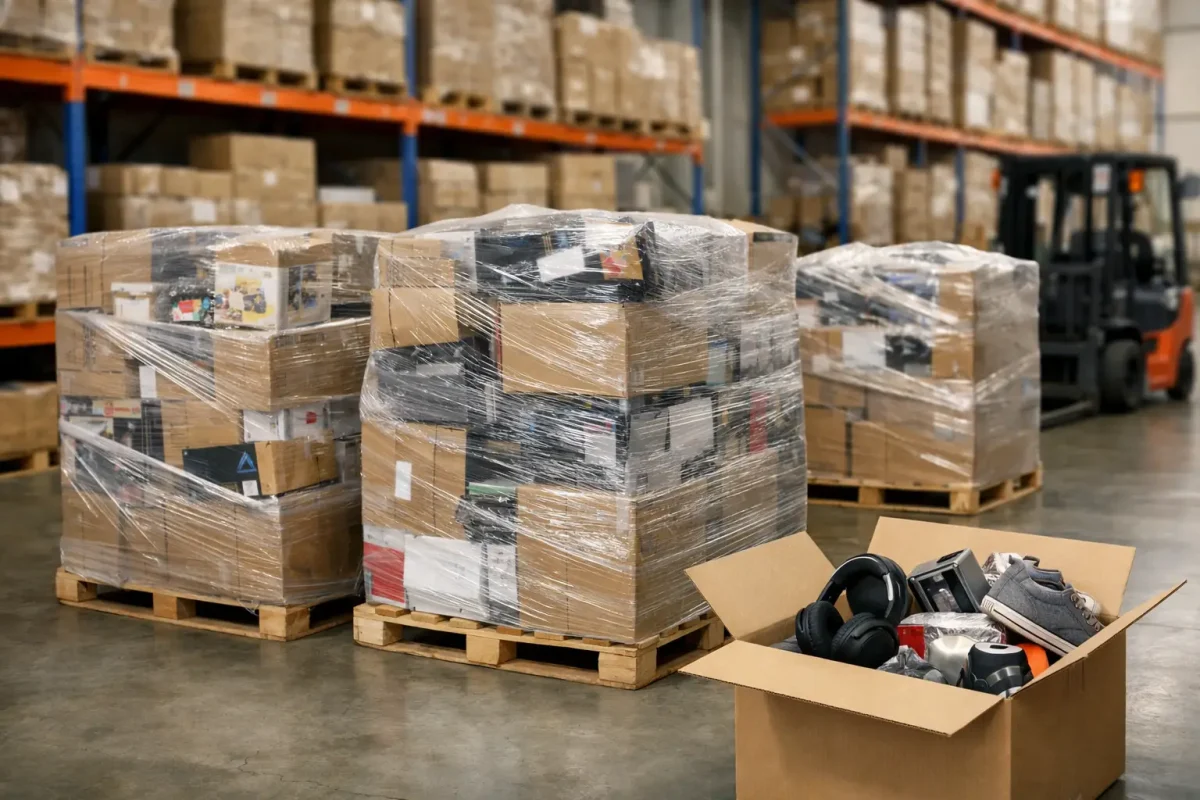
A real liquidation supplier should be able to explain where the inventory comes from and how it is categorized. Common inventory types include customer returns, overstock, shelf pulls, open-box, refurbished goods, and salvage. Those terms matter because each one affects resale value.
Overstock is usually the cleanest opportunity because the merchandise may be new and unsold. Shelf pulls can also perform well, though packaging may show wear from store handling. Customer returns are more unpredictable because some items work fine while others are missing parts or show use. Salvage is the highest-risk tier and should be priced accordingly. If a seller blurs those distinctions or avoids them altogether, that is where problems start.
What makes a wholesale liquidation pallet supplier legit?
A legitimate supplier does not need to make impossible promises. They need to provide clear inventory details, realistic condition language, consistent communication, and a verifiable business presence. Buyers should expect actual business information, category descriptions, load sizes, shipping terms, and support before and after the sale.
Manifest availability is one sign of a serious operation, especially for category-specific pallets. A manifest is not a guarantee that every item will match perfectly or perform at full retail value, but it gives buyers a basis for evaluation. If a pallet is unmanifested, that does not automatically mean it is bad. It means the buyer needs to price in more uncertainty.
Condition transparency matters just as much. If a supplier sells customer return pallets, they should say that directly. If the load includes salvage or untested goods, that should be stated. Real wholesale sellers understand that repeat business comes from accurate expectations, not hype.
Shipping and fulfillment also reveal a lot. A legitimate operation can explain freight costs, warehouse handling, lead times, and what happens if there is a problem with the order. For domestic and international buyers alike, logistics clarity is part of trust.
Red flags when asking if wholesale liquidation pallets are legit
The liquidation market is legitimate, but that does not mean every seller is. If you are evaluating a source, watch for obvious warning signs. One is vague sourcing. If a seller claims inventory from major retailers but cannot explain load type, condition, or process, be careful.
Another red flag is unrealistic value claims. Every experienced reseller has seen listings where a pallet is marketed with huge retail totals and guaranteed profit language. Retail value alone does not tell you what the goods are worth in the secondary market. Missing parts, packaging damage, testing time, marketplace fees, and unsellable units all affect true margin.
Pressure tactics are another issue. Fast-moving inventory is normal in wholesale, but a seller who refuses to answer basic questions and pushes for immediate payment without details is creating risk, not urgency. Low prices are attractive, but the cheapest pallet is often the most expensive lesson.
Poor documentation, no clear condition definitions, and no reachable customer support should also slow you down. Liquidation buying always involves risk. The right supplier helps you manage it instead of hiding it.
How buyers protect themselves before placing an order
The best liquidation buyers do not ask whether every pallet is perfect. They ask whether the numbers still work if part of the load underperforms. That is the right mindset.
Start with categories you understand. If you know shoes, apparel, tools, or kitchen goods, buy where you can spot resale potential and common defects quickly. New buyers often make the mistake of chasing electronics because the retail value looks high. Electronics can be profitable, but they also carry more testing time, higher return rates, and more condition variability.
Then check the pallet format. A small pallet or box load can be a smarter entry point than jumping into a truckload. It gives you a chance to learn the supplier, evaluate grading accuracy, and test your own resale process without tying up too much capital.
You should also run margin numbers conservatively. Assume some items will be unsellable. Assume some products will need repackaging, parts replacement, or deep discounting. If the deal only works under best-case assumptions, it is not a strong deal.
Is wholesale liquidation pallets legit if products are returned or damaged?
Yes. Returned, open-box, and damaged goods are still legitimate wholesale inventory categories. The issue is not legitimacy. The issue is valuation.
A customer return pallet can contain excellent merchandise mixed with incomplete or defective items. That does not make it fake. It means the pricing should reflect the labor and risk involved. Smart buyers purchase these loads because they know how to sort, test, bundle, part out, or sell across multiple channels.
For example, a discount store may move mixed home goods quickly at everyday low prices, while an online seller may extract more value from individual branded items. A flea market vendor may do well with tools, toys, or apparel where customers are already bargain-focused. The same pallet can produce different outcomes depending on how and where you sell.
That is why wholesale liquidation is a real business, but not a passive one. Buyers create profit through processing and resale strategy.
The real answer to is wholesale liquidation pallets legit
The honest answer is yes, but legitimacy does not erase risk. Liquidation pallets are a proven inventory source used by resellers around the world. They can open access to low-cost merchandise, flexible order sizes, and strong resale potential. They can also produce poor results when buyers ignore condition, overpay, or source from unreliable sellers.
The strongest buyers treat liquidation like wholesale math, not gambling. They buy from suppliers who speak clearly about inventory type, pallet condition, and fulfillment terms. They stay focused on categories they can move. They understand that direct-access surplus merchandise can create margin, but only if the purchase price, labor, and resale channel all line up.
For buyers who want bulk inventory without traditional wholesale barriers, liquidation pallets can be a legitimate path to growth. Companies like Pallets Liquidation Worldwide serve that market by offering access to boxes, pallets, and truckloads across broad merchandise categories for buyers who care about cost, scale, and resale opportunity.
If you are serious about building margin with liquidation, do not chase hype. Buy with a plan, buy from a real supplier, and make sure the load fits the business you actually run.

