
Style
Liquidation Pallet Buying Guide for Resellers
Jul
A pallet that looks cheap can become expensive fast when freight, testing time, unsellable units, and slow-moving inventory are ignored. This liquidation pallet buying guide is built for resellers who want to buy with a plan, protect cash flow, and turn bulk inventory into repeatable resale opportunities.
Liquidation pallets can give independent retailers, online sellers, flea market vendors, and discount stores access to recognizable merchandise below traditional wholesale pricing. But liquidation is not a guaranteed-margin product. The buyers who perform best understand what they are buying, where they will sell it, and how much work each load requires before they place an order.
Liquidation Pallet Buying Guide: Start With Your Sales Channel
Your sales channel should decide your pallet category, not the other way around. A mixed general merchandise pallet may work well for a flea market booth or discount store where shoppers expect variety and value. It may be a poor fit for an Amazon seller who needs barcodes, compliance details, predictable condition, and a focused catalog.
Before buying, identify where the merchandise will move. Local retail can handle open-box kitchen items, shelf pulls, toys, and mixed household goods. eBay sellers may have room for tested electronics, collectible items, sneakers, handbags, and individual replacement parts. Social commerce sellers often do well with clothing, beauty-adjacent accessories where permitted, toys, and impulse-buy items. Repair-focused buyers may seek salvage phones, gaming products, or appliances for parts and refurbishment.
The right inventory is the inventory you can process and sell quickly. A pallet with a higher purchase price can produce a better return than a bargain pallet if its products match your buyers and require less labor.
Choose the Condition You Can Actually Handle
Liquidation inventory is commonly sold as customer returns, overstock, open-box merchandise, shelf pulls, refurbished goods, or salvage. These labels matter because they affect both resale value and the amount of work required.
Overstock and shelf pulls are often the most attractive options for sellers seeking cleaner, retail-ready inventory. They may be excess stock, discontinued items, seasonal goods, or products removed from store shelves. Open-box merchandise can offer strong value when packaging is damaged but the item is complete and functional.
Customer returns can be profitable, especially in tools, electronics, appliances, and home goods, but the condition can vary widely. Some items may be unused; others may be incomplete, damaged, or nonfunctional. Salvage inventory is generally best for experienced buyers with repair capability, parts outlets, or a dependable local market for as-is goods.
Use these four condition questions before you buy:
- Is the merchandise tested, untested, or sold strictly as-is?
- Are accessories, chargers, manuals, and original packaging likely to be included?
- Can your business clean, test, repair, photograph, and list the items efficiently?
- Does your selling channel allow the category and condition you plan to offer?
Do not treat a condition label as a promise that every unit will look the same. Liquidation is a bulk business, and variation is part of the purchase. Build that variation into your numbers from the start.
Read the Manifest, Then Read Between the Lines
A manifest is one of the most useful tools available to a pallet buyer. It may list product descriptions, quantities, retail values, model numbers, UPCs, or estimated unit counts. It can help you determine whether the load fits your market and whether the listed products have realistic resale demand.
Still, a manifest is not the same as a guarantee of exact resale value. Retail price is not your selling price. A $100 item may only bring $35 locally, $50 online after fees, or nothing if it is incomplete or restricted on your marketplace. Use retail value as a reference point, not as projected profit.
When reviewing a manifest, look for repeatable items and recognizable brands, but also watch for product concentration. Fifty units of a popular small appliance may be excellent if you have buyers and room to test them. Fifty units of a slow-selling niche accessory can tie up capital for months. Mixed pallets spread risk, while category-specific pallets can be easier to merchandise and scale. The better choice depends on your experience and outlet.
If no detailed manifest is available, price the pallet more conservatively. Mystery boxes and unmanifested loads can be useful for sellers who are comfortable sorting mixed inventory, but they should not be the first large purchase for a buyer who needs precise margins.
Calculate Landed Cost Before You Request a Quote
The purchase price is only one part of the deal. Your landed cost is what inventory truly costs once it reaches your warehouse, store, storage unit, or home base. That number should guide your maximum bid or purchase price.
Include the pallet price, freight, taxes where applicable, unloading costs, storage, labor, supplies, marketplace fees, returns, and expected losses. If you need to rent a lift gate, use a loading dock, or pay someone to unload a truck, add that expense before you commit.
A simple working formula is: total landed cost divided by the number of realistically sellable units. The word realistically matters. Do not divide by every item on the pallet if you expect some products to be damaged, incomplete, restricted, or too low-value to list.
For example, a $1,200 pallet with $350 freight has a $1,550 landed cost. If you estimate that 70 of 100 units are sellable, your starting cost is about $22 per sellable item before selling fees and labor. From there, compare your expected selling price to the costs of preparing and moving each unit. This approach is less exciting than chasing retail-value totals, but it keeps a reseller in business.
Protect Cash Flow With the Right Load Size
New buyers often make one mistake: purchasing a truckload before they have proven demand, space, staff, or processing systems. A truckload can create excellent buying power, but it also creates a large sorting, storage, and cash-flow commitment.
Start at the load size that matches your operation. Boxes and smaller lots can help test a category. Pallets are a practical next step when you have steady sales and room to receive inventory. Truckloads make sense when you already know how fast your channel moves product and can absorb mixed conditions at volume.
Pallets Liquidation Worldwide offers bulk formats ranging from smaller buying options to pallets and truckloads, allowing resellers to increase volume when their sales capacity is ready. The goal is not to buy the largest load. The goal is to buy enough inventory to keep selling without creating expensive dead stock.
Inspect the Logistics Before the Merchandise Arrives
Freight problems can erase a good buy. Confirm whether delivery is dock-to-dock, whether a lift gate is available, and whether the carrier can access your location. Residential deliveries, limited-access sites, and missed appointments can add charges.
Ask for pallet dimensions, approximate weight, pallet count, origin location, and the expected shipping timeline. International buyers should also plan for import requirements, customs documentation, duties, local taxes, and destination handling. A low merchandise price does not help if the logistics are unclear.
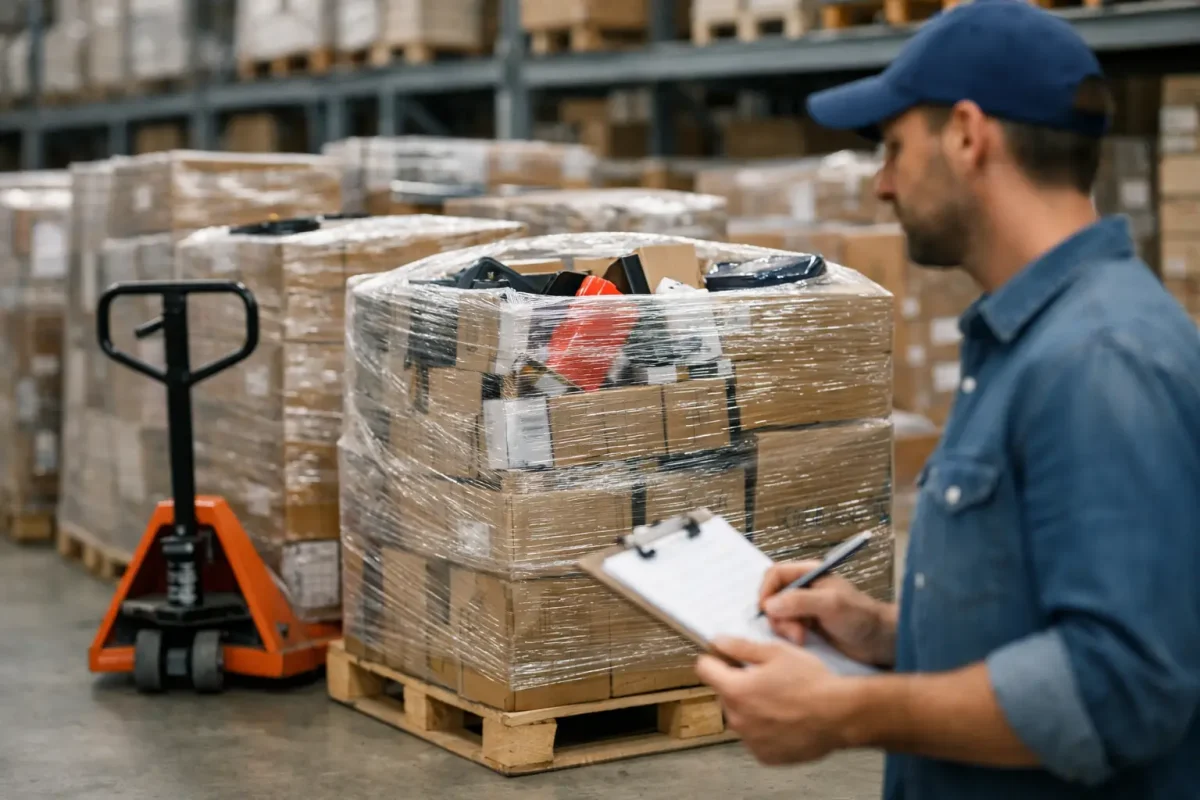
Once inventory arrives, document the shipment immediately. Take photos of the wrapped pallet, exterior damage, labels, and any visible issues before breaking it down. Then sort products into clear groups: ready to sell, needs testing, needs parts or repair, and unsellable. Fast organization gives you an accurate view of your purchase and helps you list the easiest inventory first.
Build Margin With Processing Discipline
Profit on liquidation inventory is usually made in the details. Clean items well. Test what can be tested. Match accessories where possible. Write accurate condition notes. Bundle low-value items when individual listings are not worth the time. A complete, tested product with clear photos can sell faster and for more than the same item listed as unknown.
Track results by source, category, and condition. Record what you paid, what freight cost, how many units were sellable, how long the inventory sat, and what it actually sold for. After several purchases, you will see patterns: perhaps tools move quickly in your local market, while untested electronics consume too much labor; perhaps clothing performs well live but not on a marketplace. Those patterns are more valuable than any advertised retail total.
Buy your first pallets with a sales plan, a realistic cost model, and room for surprises. The most profitable liquidation buyers are not the ones chasing the biggest stated value. They are the ones who know exactly how each pallet will move from delivery to resale.

